Scientific Prediction: On Oct. 8, 2009 a scientific prediction regarding the human genome was published below which flows from this Bible study on Canaan.
ABSTRACT: Why did Noah curse his grandson Canaan? Genesis 9 records that the boy's father, Ham, saw Noah’s nakedness, and as a result, Noah cursed his grandson Canaan. Then Canaan went on to become the patriarch of Israel’s long-standing enemies, the Canaanites. The story seems capricious on the surface, in contrast to so much reasonable history in Genesis. So a closer look is merited. A common biblical figure of speech appears in Canaan’s story, and when Christians reread the story understanding this figure, the message of this account becomes compelling. Ancient Hebrew commonly speaks of a man's nakedness to refer to sexual intercourse with the man's wife. As Moses wrote in Leviticus, "The man who lies with his father's wife has uncovered his father's nakedness", that is, he has seen his father's nakedness. Canaan lived a cursed life because he was conceived by incest. Thus the brief story twice reminds its ancient readers that Ham (not Noah) is the father of Canaan. So Noah's curse of Canaan was not misdirected anger, nor a hex nor an evil spell, but a simple recognition of cause and effect. His father Ham reaped what was sown. And Canaan's tragic circumstance became a warning to others against following in Ham's wicked way of seeing his father's nakedness. Genesis then presents an understandable origin for the conflict between the Jews and the Canaanites.
by Pastor Bob Enyart
Denver Bible Church
ARTICLE
Why did Noah curse his grandson Canaan? This boy's father, Ham, saw Noah's nakedness, and as a result, Noah cursed Canaan, who became the patriarch of Israel's enemies, the Canaanites. The story seems capricious on the surface, in contrast to so much reasonable history in Genesis. Let's take another look at what happened.
Origin of the Canaanites: The various tribes of Canaanites are listed in Gen. 10:15-18, including the Sidonians, Jebusites, Amorites, Girgashites, Hivites and Arvadites. (It's a small world and a young earth, as this author resides in Arvada, Colorado.) The Canaanites settled in familiar areas including Sodom and Gomorrah and the cities of Gaza (Gen. 10:19). The hostility with their namesakes (and mixed descendants) continued right up until the time of Christ for example when He resisted ministering to "a woman of Canaan" (Mat. 15:22). But why did Canaan and therefore his descendants become cursed? Reading the account in Genesis 9, many suppose that after Noah became drunk, Ham saw his father naked, and as a result, Noah cursed Ham's son Canaan. I submit that is not at all what happened. For that story, at least on its surface, would be an especially arbitrary and capricious origin for Canaan, Israel's great nemesis. Here is what actually happened:
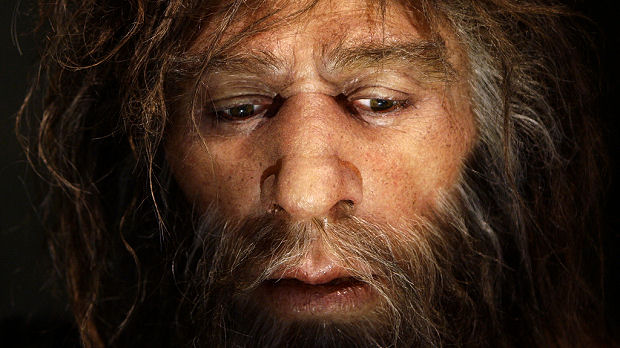 The Story is About Canaan: The story is about Canaan more than about Noah. As shown below, seeing the nakedness of a man is a common Hebrew expression for having sex with his wife (Lev. 20:11). Canaan lived a cursed life because he was conceived by incest. Noah's kids, Japheth, Shem, and Ham lived for about a century in the wicked pre-flood world. The statement that "Ham was the father of Canaan" (Gen. 9:18) begins this passage, which then quickly repeats "Ham, the father of Canaan" (Gen. 9:22), to emphasize by reiterating that relationship. The story ends with three mentions of Canaan including "Cursed be Canaan" (Gen. 9:25). The first chapters of the Bible quickly cover 1,600 years of sinful human history. Yet, there is no mention of intoxication until after the flood, until Noah planted a vineyard and became drunk. While Noah was inebriated, one of his sons, Ham, committed incest with Noah's wife. Ham took advantage of his father's drunkenness. A husband is to be a covering for his wife to protect her but Noah being drunk (e.g., Hab. 2:15), Ham saw that Noah's wife was uncovered. Having lived before the flood in a sexually perverse society, Ham committed incest with his own mother, impregnating her and thereby fathering Canaan. The earliest Canaanites should not misrepresent their own heritage, so because Noah's own wife bore Canaan, the story twice clarified for its ancient audience that "Ham was the father of Canaan," not Noah.
Incest is a Curse: Of Israel's nearby enemies, not all were Canaanites. For example, the Moabites and Ammonites were the product of other parent/child relations. Again involving drunkenness, Abraham's nephew Lot impregnated his daughters who gave birth to the Moabites and Ammonites (Gen. 19:32-38). Any child conceived in this way, regardless of mutational considerations, enters life set up to fail. Canaan had his grandmother for a mother, his grandfather for an uncle, his mother for a great aunt, his father for a cousin, and, worst of all, his brother for a father (his half-brother, that is). Thus morally and sociologically, such incest was always a curse. Genetically, early humans reproduced with siblings and first cousins without harm because deterioration in the genome had not yet become a significant factor. But quickly after the Flood, the severity of mutations likely increased (including as the result of radioactive decay on the continents). This tragic development, a foreseeable result of sin, moved God through the Mosaic Law to prohibit relations between close relatives (Lev. 18, 20). But undoubtedly whether before or after the Flood, the unthinkable parent/child relation would put mankind's built-in genetic proof-reading and repair mechanisms into overdrive.
Known Euphemisms are Unambiguous: As all authors and peoples do, Moses and the Jews used figures of speech. Some of the Bible's figures of speech are euphemisms that promote modesty. For example, instead of saying that Adam had sexual intercourse with Eve, the Bible more politely says that "Adam knew Eve his wife, and she conceived" (Gen. 4:1). And Moses writes, "the man who lies with" rather than using the modern and more crude phrase, "has sex with." The reader who misses these common figures of speech will misunderstand the plain meaning of various passages. Moses wrote the first five books of the Bible. And God through Moses used the same decency when describing other physical relations. For example, when prohibiting incest in the Mosaic Law, rather than saying, a man shall not have intercourse with his mother, Moses wrote that he shall not "uncover his father's nakedness."
'The man who lies with his father's wife has uncovered his father's nakedness…' Lev. 20:11
When Moses also wrote that Ham saw his father's nakedness, that was a respectful (and appreciated) way of reporting that he copulated with his mother. See how frequently Moses and the Scriptures use this Hebrew figure of speech:
'If a man lies with his uncle's wife, he has uncovered his uncle's nakedness. …If a man takes his brother's wife… He has uncovered his brother's nakedness.' Lev. 20:20-21
Committing incest with any female "near of kin" can be described as "uncovering his nakedness" (Lev. 18:6), referring to the appropriate male relative, including the nakedness of your father (with your mother, Lev. 18:7), or your sister, granddaughter, stepsister, aunt, daughter-in-law and sister-in-law (Lev. 18:9-15). (See kgov.com/polygamy#incest for when and why God prohibited marriage between relatives.) Of course, this can also be described in more literal terms as uncovering the woman's nakedness, but it can also be referred to, idiomatically, as referring to the husband's, father's, brother's, uncle's, or son's nakedness. Her nakedness can equal his nakedness because as Paul writes, your body is "not your own" (1 Cor. 6:19), and from this perspective, your mother's body belongs to your father. Thus:
'The nakedness of your father's wife you shall not uncover; it is your father's nakedness' Lev. 18:8
Again, "It is your father's nakedness!"
Ezekiel used this figure of speech in this Hebrew parallelism:
"In you [O Israel] men uncover their fathers' nakedness; in you they violate women…" Ezek. 22:10
And Habakkuk condemns not the sin of homosexuality but of getting your neighbor drunk in order to seduce his wife, when he warns:
"Woe to him who gives drink to his neighbor, pressing him to your bottle, even to make him drunk, that you may look on his nakedness!" Hab. 2:15;
Habakkuk warns against looking upon a neighbor's nakedness, which is just the slightest alternate form of uncovering his nakedness and of what Ham did, of seeing his father's nakedness. (See also Leviticus 18:10, 14, 17-18; 1 Samuel 20:30 and Ezekiel 22:10-11.)
So, understanding this common Hebrew figure of speech enables the reader to comprehend Moses' 3,500-year-old account of why Noah cursed Canaan:
…Ham was the father of Canaan [which is the actual topic of this story]… And Noah began to be a farmer, and he planted a vineyard. Then he drank of the wine and was drunk, and became uncovered in his tent [his own drunkenness meant he could no longer provide protection, that is, a covering, for his wife and so she became vulnerable and exposed to Ham’s wickedness]. And Ham, the father of Canaan [repeated to emphasize the point of the story and to hinder any misrepresentation about the real identify of Canaan's father], saw the nakedness of his father [that is, he committed incest with Noah's wife, his own mother], and told his two brothers outside [as wicked people often brag of their sin, and as misery loves company, perhaps even inviting them to do likewise]. But Shem and Japheth took a garment, laid it on both their shoulders, and went backward and covered the nakedness of their father [refusing to take part in what was apparently a rape, and literally giving her a covering, and in hopes of beginning the healing process for her and their family]. Their faces were turned away, and they did not see their father's nakedness [i.e., their mother's nude body, which clear meaning avoids the absurdity of ignoring the common figure of speech and of taking the passage hyperliterally]. So Noah awoke from his wine, and knew what his younger son had done to him [that Ham had violated Noah's wife, which he learned from her and his other sons]. Then he said [after he learned of the pregnancy]: "Cursed be Canaan [whose father was Ham]…" Gen. 9:18, 20-25
Many Prefer to Think of the Bible as Unreasonable: Why do Christian readers often miss this real story of Canaan? The undermining of Genesis as literal and rational history leads believers, even many authorities, to neglect serious study of Genesis and much of the Old Testament. As milliions have been taught that they cannot trust the Bible's six literal days of Creation, nor its story of Noah's Ark and a global flood, then why worry about a silly detail like Noah cursing a baby grandchild for his own drunken behavior? Many readily recognize that interpretation as presenting a capricious and arbitrary account of Noah's behavior, yet they also seem comfortable with that characterization. For some theological traditions seem comfortable with arbitrary and capricious judgment and others urge taking the Bible with a grain of salt. Not unlike liberal Christians who misrepresent the Hebrew Scriptures as commanding the death penalty for fornication, if the OId Testament seems unreasonable, then many feel justified ignoring it.
The Origin of the Worldwide Taboo Against Incest: Canaan's true story shows the tragic reality of a child being set up to fail by the wickedness of his father. Thus Noah cursed Canaan as a statement of that reality, not as an evil spell or to jinx him, but as a warning to others against following in Ham's wicked ways. This account, at the very beginning of the repopulation of the Earth, also helps to explain the world's ubiquitous taboo of incest between parent and child, found by anthropologists to exist in virtually every known age and in virtually every known culture. The lesson was a harsh one to learn. Canaan was cursed inherently by being conceived through incest. The law of reaping and sowing inexorably applies to the children of fallen men. Children are blessed when their parents obey God and cursed otherwise. These curses do not operate throughout the world daily through millions of supernatural micro-interventions but by the natural consequences of their parents' behavior. For primarily, that is what blessing and cursing means. So a father's alcoholism curses, that is, harms, his child, not by intervention fiat from God (nor Noah) but by the cause and effect that children suffer under bad parenting, which is an unavoidable part of man's fallen existence until God ends this phase of human history.
So incest set the background for centuries of conflict between Noah's Hamitic descendants, especially those through Canaan, against the descendants of Shem, the Semites, especially the Jews, to whom God promised the land of the Canaanites. While the story of Canaan’s curse follows the Creation and Flood accounts, rightly understood it helps us to see that all throughout, Genesis is a rational book of history.
Source: from Bob Enyart’s life's work, an overview of the story of the Bible, called The Plot.
A prediction about the worldwide distribution of human genetic sequencing (see below) is an outgrowth of the Bible study above, in that scientists will discover a genetic pattern resulting from not three but four sons of Noah's wife. Relevant information comes also from mitochondrial DNA (mtDNA) which is not part of any of our 46 chromosomes but resides outside of the nucleus. Consider first some genetic information about Jews and Arabs, Jewish priests, Eve, and Noah.
Jews and Arabs Biblical Ancestry: Dr. Jonathan Sarfati quotes the director of the Human Genetics Program at New York University School of Medicine, Dr. Harry Ostrer, who said:
Jews and Arabs are all really children of Abraham … And all have preserved their Middle Eastern genetic roots over 4,000 years.
This familiar pattern, of the latest science corroborating biblical history, continues in Dr. Sarfati's article, Genesis correctly predicts Y-Chromosome pattern: Jews and Arabs shown to be descendants of one man.
Jewish Priests Share Genetic Marker: The journal Nature in its scientific correspondence published, Y Chromosomes of Jewish Priests, by scientists from the University of Arizona, Haifa (Isarel's) Technical Institute, and University College of London, who wrote:
These Y-chromosome haplotype differences confirm a distinct paternal genealogy for Jewish priests.
The central historical claim of the cultic Book of Mormon is that American Indians are Jews. As expected, genetic science does not reinforce, but rather contradicts, that claim, which is also seen to be false culturally, religiously, and historically. Contrariwise, because the Judeo-Christian Scriptures are true, mountains of evidence corroborate their historic claims. Regarding Jewish priests, Dr. Sarfati adds to the above that, "These Jews have the name Cohen, the Hebrew for priest, or variants like Cohn, Kohn, Cowen, Kogan, Kagan, etc." and that, "Even today, it is possible to identify the Levites, because they have names such as Levy, Levine, Levinson, Levental..."
Mitochondrial Eve: As reported by Ann Gibbons in Science magazine's article, Calibrating the Mitochondrial Clock, using actual measured mutation rates, if these rates have been constant, then "mitochondrial Eve… would be a mere 6000 years old." The first evolutionary estimates were that mtEve (a single female or a single female's lineage) lived 200,000 years ago, but then in 1997 the journal Nature Genetics published, "A high observed substitution rate in the human mitochondrial DNA..." reinforced by a paper in the American Journal of Physical Anthropology on "High mitochondrial mutation rates..." Actually measured rapid mutation rates (now estimated at one every other generation), is what led to the recalibration of Eve's age down to thousands, not hundreds of thousands of years. From an anthropology professor's popular article, "Analyses of the mitochondrial DNA of living humans from around the globe have shown that all are ultimately descended (if we trace exclusively through female links) from a common ancestress..." This evolutionary observation would also result of course if in fact we have all descended from an original, created biblical Eve. However scientists quickly point out that their analysis doesn't require a biblical Eve. For example, you and all your full siblings have your maternal grandmother's mtDNA and yet you are all also descended from another woman from her generation, your paternal grandmother. Yet this mtEve finding does falsify two evolutionary expectations, the first from an old minority view held by evolutionists like the discoverer of "Peking Man," that humans evolved from parallel hominid groups. Secondly, just as the discovery of soft-tissue from a T. rex falsified the evolutionary expectation that we would never find original biological material from dinosaur fossils, the recent age of mitochondrial Eve falsifies the mainstream Darwinist expectation that she would have been much older. That expectation is falsified whether we use the 6,000 year date which is based on exclusively human DNA and documented mutation rates, or even when evolutionists stretch that date by one or two orders of magnitude as they do by including chimp DNA in their data set (which is circular reasoning if used as evidence for an evolutionary time frame). Either way, this finding falsifies the evolutionary expectation that such an Eve would have lived much earlier. (For more about the recent Eve, see creation.com's "A shrinking date for Eve," the journal Nature, Walt Brown's assessment, and Real Science Radio's List of Genomes that Just Don't Fit.)
 Y-Chromosomal Adam (Really, Noah): Further, scientists found the genetic evidence that the human race descended from a single man. Surprising, to evolutionists that is, the journal Science published, "Absence of polymorphism at the ZFY locus on the human Y-chromosome." After mtEve was claimed to live about 200,000 years ago, Y-chromosomal Adam was claimed in leading journals to have lived 59,000 years ago. The evolutionists, with their uber-flexible story-telling scientific method, immediately went to work explaining that Y-chromosomal Adam would be far younger than mtEve because of polygyny. (But like with Eve, the circular group-think dogma went to work recalibrating based on evolutionary assumptions and by 2013, Y-chromosomal Adam was now comfortably claimed to be probably twice as old as Eve, polygamy becoming suddenly irrelevant.) The discovery of Y-chromosomal Adam corroborates the genetic bottleneck of the global flood because all men alive have descended from one man who lived more recently than Adam and Eve. He was Noah. (This all builds on the finding in the 1970s of evolutionist Maynard Smith and others that the human population must have passed through a period of drastically reduced size prior to the more recent rapid population increase. About this, the journal Nature published a letter, Noah's Haemoglobin, from Dr. Richard N. Harkins and others from the Oregon Health and Science University describing the "reduction in the human population to eight individuals; Noah, his wife, their three sons, Shem, Ham, and Japeth, and the sons' wives. It seems entirely plausible that this small population could be homogenous for haemoglobin genes. Thus the book of Genesis documents a series of human population changes which are consistent with changes required from consideration of amnio-acid sequences alone.") As Dr. Walt Brown summarizes all this, "Today, the world’s population is 7 billion people. Even if many women lived 6,000 years ago, on average, each female must have had many children. Whenever the average number of children per female exceeds two, the chance of only one of these many females having continuous female descendants today becomes highly improbable. A similar unlikely event must also happen for males. Having both improbable events happen concurrently is ridiculously improbable." Most astronomers came to admit, uneasily, that the universe had a beginning (but still they reject Genesis by holding to an increasingly untenable Big Bang theory. Likewise, evolutionists are acknowledging much of what the biblical creation model predicts about the human genome, while not realizing that the historic events recorded in Genesis help wonderfully to account for their data. For of course the Lord referenced "Noah" as an actual historic person (Mat. 24:37-39), and regarding Adam and Eve, Jesus Christ reminded us that, "from the beginning of the creation [not after billions of years], God made them male and female" (Mark 10:6), as "Eve... was the mother of all" (Gen. 3:20).
Biblical Genetic Bottleneck Predictions: What genetic predictions arise then from the biblical account of the global flood? Moses wrote that Noah was "perfect in his generations" (Gen. 6:9), taken by many to refer to the integrity of his genes, and also that he was "a just man... who walked with God," the factors which led the Lord to save him and his immediate family from global judgment. Regarding the X and Y sex chromosomes, the human race has much diversity within the X chromosome, which molecular biologists have grouped worldwide into three families, except for Africa, where there is tremendous additional diversity. Meanwhile, unexpected by evolutionists but expected by biblical creationists, the human Y chromosome shows extraordinary consistency everywhere on earth. (Yet geneticists were shocked by the 30% difference when compared to humans, of the chimp's Y chromosome.) How many different X and Y chromosomes were on the Ark? And according to the Bible's historical account, which of those had descendants? We all have descended not only from Adam, but also, through Noah and his three sons. Because the Y chromosome is passed only from father to son, there was only one Y chromosome on the Ark. Most creationists, understandably, mistakenly assume that there were only three reproducing X chromosomes on the Ark. Biologist Dr. Rob Carter with Creation Ministries International (who has published in the field in an Oxford journal) produced an extraordinary DVD, Mitochondrial Eve and the 3 'Daughters' of Noah which everyone should watch (especially microbiologists and all who want a better understanding of God and of human history). There were four women on the Ark. Many Bible students including Dr. Carter assume that the Scripture relates descendants from only Noah's three daughters-in-law. In truth, as Moses wrote, "The man who lies with his father’s wife has uncovered his father’s nakedness" (Lev. 20:11). Thus in Genesis 9 Moses recorded, using this figure of speech (as detailed above) in a manner as dignified as possible toward Noah's wife, that Ham committed incest by forcing himself on his own mother, shortly after they disembarked. Therefore she bore Canaan. The worldwide distribution of X and Y chromosomes should (and does) reveal the Ark's genetic bottleneck of one Y and approximately eight X chromosomes. (Between Noah's wife's three sons, they inherited either one or both of her chromosomes.) Noah's wife's fourth son, Canaan, as the product of incest, could have inherited the same X chromosome from both his father and from his mother which may have triggered rapid diversification from built-in genetic mechanisms designed to maximize the robustness of the human genome. Many Bibles published by Thomas Nelson contain a map (similar to many others) showing the worldwide distribution of Noah's sons' descendants after Babel. These maps show the story of three of Ham's sons whose descendants would have almost exclusively intermarried for many centuries because of the earth's natural geographic boundaries. By settling in Africa, the descendants of Ham's sons Mizraim and Put mostly isolated themselves from intermarrying with the rest of humanity, except for the descendants of Canaan who settled in Palestine. In the explosive early growth of mankind repopulating the earth, Africa was historically separated from the genetic diversity elsewhere. (Before anyone accuses Scripture or this analysis of racism, remember:
a) that the Bible teaches we are all one human race from Adam
b) that God "has made from one blood every nation" Acts 17:26
c) that Jesus died for all "the world" John 3:14-16, 2 Pet. 2:1, etc.
d) that as Dr. Carter said, those of us descended from some European countries could as easily be described as inbred as Africans are described as possessing extreme X chromosomal variation, and
e) that evolution and Charles Darwin's own racist views provided tragic support for racism, and that
f) genetic scientists have discovered Africa's extreme X chromosome variation.)
Sexual reproduction can provide genetic robustness through the merging of chromosomes from far-distant relatives, thus as the effects of the fall increased degenerative disease, in due time God prohibited reproduction between siblings and even between other close relatives. However incest between mother and son, or father and daughter, would always have been emotionally and genetically injurious and was unacceptable even prior to God's Levitical prohibitions [Gen. 19:32]. Parent and child incest would introduce a greater genetic challenge even than that between siblings. In the baby Canaan, humanity met such a challenge affecting genetic processes. As the human race multiplied over the next millennia, the X chromosomes of Noah's sons and wives mingled across the face of the Earth where today geneticists map three families of X chromosomes worldwide, except in Africa. As noted, Africa possesses extreme X-chromosomal diversity. There, the Canaanite descendants who intermarried with their neighboring sibling descendants in Africa spread Canaan's genes to an audience captive within the continent where, barring any unknown environmental causes, it expresses itself today in that extreme X diversity with the genetic mechanisms attempting to maximize the genomes robustness. Ham's descendants who migrated away from Africa, such as the Hittites (forerunners of Anatolian Turkey), had access to a wider gene pool and so the "Canaan Effect," a term coined here, is seen primarily in Africa.
 Africa had it's natural geographic boundary amplified by a reinforced genetic wall fortified by multiple factors. First, Canaan was the primary physical and genetic barrier between Africa and the world. Secondly, a further challenge and genetic barrier arose from the reproduction of Lot with his daughters which incest produced the neighboring nations of the Moabites and Ammonites who lived just east of the Canaanites, east of the Dead Sea, the Jordan River and the Sea of Galilee, which thickened that genetic wall by introducing other related genomic challenges. And thirdly, the effect of this reproductive partitioning was further magnified because Israel possessed the other dominant gene pool that stood between Africa and the rest of the world, and God had prohibited the Jews from intermarrying with any Gentiles. So, for genetic purposes, Africa was walled in, being populated only by Ham's sons as isolated from the rest of the world by Canaan.
Creationists have expected that the worldwide mapping and analysis of mitochondrial DNA and of X and Y chromosomes would fulfill predictions of the biblical model of recent creation, the bottleneck of the global flood, and the distribution from Babel in Mesopotamia. However, this author is unaware of any creationists who expected the X diversity in Africa. However, the above Bible study has appeared in audio recorded Bible studies since the 1990s when a summary was also published in print. That study of Canaan, especially the identification of Canaan's parents being Noah's wife and her son Ham, adds to the creationist's understanding of the human genome a fourth son of Noah presenting an X chromosomal challenge arising from that mother-son relationship. So the human race is descended from Noah's wife's four sons.
October 8, 2009 Prediction
Scientific Prediction: The above historical data based on Genesis leads us to predict that the extreme X-chromosomal diversity in Africa will be found to be attributable to the genetic responses to the near-exclusive reproduction of the descendants from three brothers (Canaan, Mizraim, Put) that magnified the genetic challenge of an initial mother-son relationship (which produced Canaan), and that a factor in our worldwide mitochondrial DNA lineages will be shown to be the genetic bottleneck of four women (four, because Noah's wife also bore a child after the flood).
Published by the CSF or International Creation Conference: A summary of the Bible study above was published either in a Creation Science Fellowship newsletter or in the proceedings of one of the International Creation Conferences after being written and submitted by James Hilston. (I've lost track of where this was published but it was sometime since the mid 1990s. If you know, please contact me at BobEnyart@gmail.com or at 1-800-8Enyart. Thank you!)
Bob Enyart pastors Denver Bible Church, hosts a conservative talk radio program at KGOV.com, and co-hosts Real Science Radio. Bob first had a technical career working at McDonnell Douglas Helicopter Company on the Army’s Apache helicopter; as a systems analyst for "Baby Bell" U S West; as a program manager for Microsoft in Redmond, Washington; and as a senior analyst for PC Week. Bob became a believer in 1973, entered full-time Christian work in 1989, and in 1991 began hosting his daily radio show on America's most-powerful Christian radio station, Denver's 50,000-watt AM 670 KLTT. In January 2000, Colorado's Derby Bible Church planted Denver Bible Church with Bob as pastor.